Aerotrem Technologies Urban Rescue Mark III (concept design)
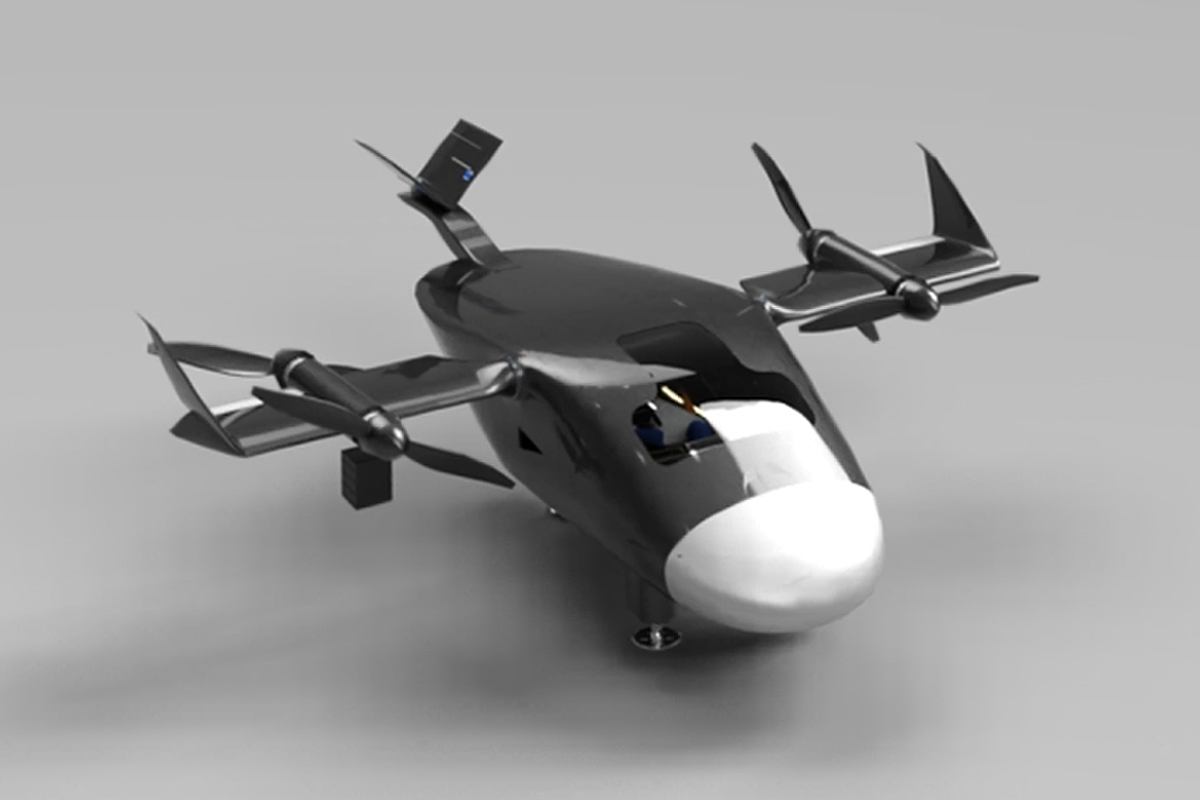
(Image credit: Aerotrem Technologies)
Urban Rescue Mark III (concept design)
Team Tremblay (GoAERO team name)
Aerotrem Technologies Inc.
Montreal, Quebec, Canada
www.aerotrem.ca
Founded in 2026 by Zachary Tremblay, Aerotrem Technologies is in the business of designing and manufacturing urban rescue passenger electric vertical takeoff and landing (eVTOL) aircraft for the nascent advanced air mobility (AAM) industry. Tremblay has a Bachelor of Engineering and Mechanical Engineering degrees from McGill University in Montreal, Quebec, Canada. Tremblay's company is located in Montreal as well. In 2024, Tremblay entered the GoAERO prize competition while he was a mechanical engineering undergraduate at McGill University which is also in located in Montreal.
Tremblay has a passion for engineering and flying and has designed and manufactured drones since 2020. He started a team called McGill Drones at McGill University with the purpose of building and flying drones. From the ground up, he designed and built the largest unmanned aircraft vehicle (UAV) in the history of McGill University during the years 2022-2023. Tremblay won third place in the Design-Build-Vertical Flight Competition of the 2023 competition sponsored by the Vertical Flight Society. In 2024, he was a Lichten Award Vertical Flight Society Americas Regional winner for a research paper on test stands for tailsitters. During 2023-2024 his team grew from 20 to over 100 people, raised over $30,000.00 in sponsorships and funding, invested in long-term performance and longevity of the team, presented a paper at the Aerial Evolution Association of Canada 2024 conference and much more.
When Tremblay learned about the GoAERO prize competition, he knew he was ready to go one step further and make an emergency rescue passenger eVTOL aircraft. In fact, Tremblay was so inspired by the GoAERO competition (2024-2027) that he founded his own company to continue the mission of the contest in the real world. While Team Tremblay entered the GoAERO competition with its emergency response eVTOL aircraft, the team was not selected as a Stage 1 or Stage 2 prize winner. However, his competition project demonstrated the team's approach to emergency response eVTOL aircraft design.
Urban Rescue Mark III passenger eVTOL aircraft (concept design)
The Urban Rescue Mark III is an autonomous emergency rescue passenger eVTOL aircraft. The autonomous piloting includes three downward facing LiDAR sensors, a radial LiDAR, two color cameras and a MiDaS AI Library. A lightweight stretcher can fit into the cabin which is safely secured before flight. The original company name was Skytrem Flying Ambulance but was later changed to AeroTrem Technologies. This concept design aircraft was developed in 2024.
The estimated cruise speed is 252 km/h (157 mph) and has a calculated range of 345 km (214 m). The aircraft has one main high tilt-wings with four propellers, four electric motors and is powered by a hydrogen hybrid-electric power source. The empty weight of aircraft is projected to be 489 kg (1,080 lb), with a targeted maximum payload weight of 110 kg (243 lb) and has a foreseen maximum takeoff weight of 600 kg (1,323 lb). The aircraft has a small V tail. The fuselage is made from carbon fiber composite to give the aircraft a high strength to low weight ratio. The rescue drone has fixed quadricycle shock absorbing strut landing gear. The custom landing gear can automatically extend or retract based on uneven or sloping terrain. The landing gear has also been designed to safely land the aircraft on sand, in a flooded area or in rough terrain.
In 2024, the estimated selling price of the urban rescue drone was $799,000.00 CAD.
About the GoAERO Prize Competition
The GoAERO Prize, sponsored by Boeing, is a three year competition (2024-2027) offering over $2 million USD in prizes that challenges engineers worldwide to create portable, versatile and autonomy-enabled Emergency Response Aircraft that address not only everyday medical emergencies but also to be used in natural disasters, humanitarian emergencies and climate crises worldwide. Each team designs and builds autonomous Emergency Response aircraft capable of delivering a first responder, medical equipment and supplies and ultimately evacuating victims in need to a rescue ambulance or hospital.
More than 150 teams from around the globe are competing for the GoAero prizes. The GoFly and GoAERO prizes were developed by Boeing, NASA and other organizations to help the nascent advanced air mobility (AAM) industry move forward.
Specifications:
- Aircraft type: Emergency rescue passenger eVTOL (concept design)
- Piloting: Autonomous piloting. 3 downward facing LiDAR sensors, radial LiDAR, 2 color camers, MiDaS AI Library
- Capacity: 1 person
- Cruise speed: 252 km/h (157 mph)
- Range: 345 km (214 m)
- Empty weight of aircraft: 489 kg (1,080 lb)
- Maximum payload weight: 110 kg (243 lb)
- Maximum takeoff weight: 600 kg (1,323 lb)
- Propellers: 4 propellers
- Electric motors: 4 electric motors
- Power source: Hydrogen hybrid-electric power source
- Fuselage: Carbon fiber composite
- Windows: Canopy over the cockpit
- Wings: 1 high main tilt-wings
- Tail: 1 V tail
- Landing gear: Fixed quadricycle shock absorbing strut landing gear
- Safety features: Distributed Electric Propulsion (DEP) uses multiple propellers or electric ducted fans, each powered by electric motors, to increase safety through redundancy. If one or more components fail, the remaining ones can still ensure a safe landing. There are also redundancies of critical components in the sub-systems of the aircraft providing safety through redundancy. Having multiple redundant systems on any aircraft decreases having any single point of failure.
Related Aircraft:
- Aerotrem Technologies Urban Rescue Mark I (concept design). The Mark II is located here.
- Aerotrem Technologies Urban Rescue Mark IV (concept design)
Resources:
- Aerotrem website
- McGill Drones and Vertical Flight Society website
- Zachary Tremblay LinkedIn
- Video: Vertical Flight Society (VFS) 3rd Annual Design Build Vertical Flight (DBVF) Student Competition, SURVICE Engineering, Aug. 31, 2023
- Article: Meet the Teams: Team Tremblay, GoAERO, Nov. 6, 2024

Recent Pages
- DreamFly Aerotech DF3000 Youlong (prototype)
- aeroG Aviation AG-8 (concept design)
- NASA Tiltwing-Two (illustration)
- CoolFly Urban 4 (concept design)
- CoolFly Standing Flight Platform (prototype)
- CoolFly Urban 3 (prototype)
- CoolFly Urban 2 (concept design)
- CoolFly Urban (production model)
- CoolFly Dream ST (production model)
- CoolFly Dream Pro (production model)